Momentum 4 or Sony XM5? For audiophiles?

Choosing between the Sennheiser Momentum 4 Wireless and Sony WH-1000XM5 comes down to what you value most in your music. The Momentum 4 is the stronger choice for listeners who prioritize sound quality, detailed playback, and long battery life. The Sony XM5 is a better fit for those who want strong noise cancellation, useful listening features, and a more travel-friendly experience.
Neither headphone is a perfect match for every audiophile. Your music preferences, listening environment, and willingness to adjust sound settings can make a real difference.
Sound Quality: Which Headphones Reveal More Musical Detail?
For most listeners who care about sound quality first, the Sennheiser Momentum 4 Wireless has the edge in overall musical tuning, while the Sony WH-1000XM5 offers a bass-rich presentation and strong sound customization. Both can produce detailed, enjoyable audio, but neither is a replacement for a dedicated wired headphone designed for critical listening.
Bass Response and Control
The Momentum 4 delivers deep bass with a full, lively sound. Its low frequencies can add weight to electronic music, hip-hop, and modern pop without taking over every other part of the mix.
The Sony XM5 also emphasizes bass, giving drums and bass lines a powerful presence. Some listeners may prefer this fuller presentation, while others may want to reduce the bass using the Sony Headphones Connect app.
For example, if you listen to bass-heavy electronic music, both headphones can be enjoyable. If you prefer acoustic recordings where you want to hear the bass guitar separately from the other instruments, the Momentum 4 is a strong starting point.
Vocals and Midrange Clarity
Vocals, guitars, pianos, and many other instruments sit in the midrange. This area matters when you want singers to sound natural and instruments to remain easy to distinguish.
The Momentum 4 offers a balanced, engaging presentation that works well for many music styles. The XM5 can also sound clear, although its warmer, bass-forward tuning may change how some recordings feel.
Neither headphone wins for every singer or recording. Vocal quality depends on the recording itself, your listening volume, and your preferred sound signature.
Treble and Fine Details
Treble affects the sound of cymbals, strings, and other high-frequency details. The Momentum 4’s relatively balanced tuning can make music sound clear without adding too much brightness.
The Sony XM5 also reproduces fine details, but its overall presentation may appeal more to listeners who prefer a fuller sound. Using the EQ on either model can help you adjust the balance to suit your taste.
Remember that hearing more treble does not always mean hearing more detail. Excessive high frequencies can make a recording sound sharp rather than accurate.
Momentum 4 vs Sony XM5: Feature Comparison
| Feature | Sennheiser Momentum 4 | Sony WH-1000XM5 |
|---|---|---|
| Overall sound | Full, detailed, musical | Warm, bass-rich |
| Bass | Deep and punchy | Powerful and emphasized |
| Sound customization | Graphic EQ and presets | EQ and sound personalization |
| Bluetooth audio codecs | SBC, AAC, aptX, aptX HD, aptX Adaptive | SBC, AAC, LDAC |
| Active noise cancellation | Very good | Generally stronger |
| Advertised battery life | Up to 60 hours | Up to 30 hours |
| Wired listening | Yes, with a compatible cable | Yes, with a compatible cable |
| Multipoint connection | Yes | Yes |
| Best reason to choose it | Music-focused listening and battery life | Noise cancellation and travel features |
| Available |  | |
Actual battery life and sound quality vary with settings, source devices, and listening conditions.
Which Headphones Are Better for High-Quality Audio?
The answer depends partly on how you listen to music. A headphone’s Bluetooth codec, source device, recording quality, and sound tuning all affect the final experience.
Bluetooth Codecs and Music Streaming
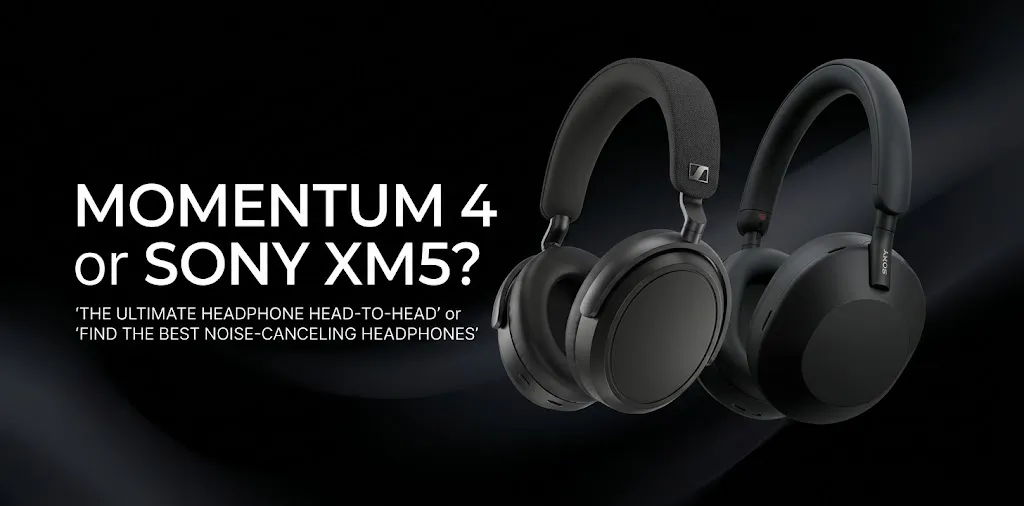
The Momentum 4 supports aptX Adaptive, while the Sony XM5 supports LDAC. Both also support common Bluetooth codecs such as SBC and AAC.
These higher-quality codec options can be useful, but compatibility matters. You need a source device that supports the relevant codec, and the streaming service must provide suitable audio quality. An iPhone, for example, does not support LDAC or aptX Adaptive over its standard Bluetooth audio connection.
A high-resolution audio label alone does not guarantee that one headphone will sound better. Differences in tuning can matter more to your enjoyment than the codec name.
Wired Listening
Both headphones support wired playback through a compatible analog connection. This can be useful when listening from a computer, audio player, or other device with a headphone output.
However, neither model becomes a fully passive, battery-independent headphone in every operating mode. Active noise cancellation and other electronic features require power, and you should check each model’s manual for the behavior of its wired modes.
If your goal is critical listening at a desk, it is also worth considering dedicated wired headphones. They may offer a more suitable listening experience for your needs, depending on their tuning and design.
Noise Cancellation and Listening Comfort
The Sony XM5 is the better choice if blocking outside noise is a major priority. Its active noise cancellation is particularly effective against steady sounds such as airplane engines and public transportation noise. The Momentum 4 also offers useful noise cancellation, but Sony generally has the advantage in this area.
Comfort matters just as much during long listening sessions. Both headphones have cushioned over-ear designs, but head shape, glasses, clamping force, and ear-cup fit can change how they feel after an hour or two.
The Momentum 4 also has a substantial battery advantage. Sennheiser advertises up to 60 hours of playback, compared with Sony’s advertised 30 hours with noise cancellation enabled under specified conditions. Real-world results vary.
Which Headphones Should Different Audiophiles Choose?
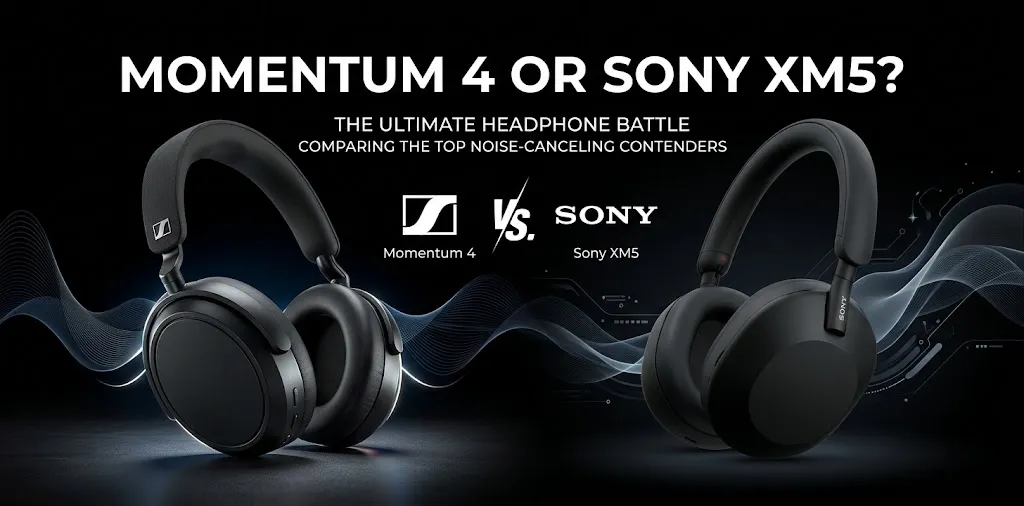
Choose the Momentum 4 for Music-Focused Listening
The Momentum 4 is a sensible pick if you spend most of your headphone time listening to albums, playlists, acoustic tracks, rock, jazz, or electronic music. Its musical tuning, extensive battery life, and broad codec support make it a compelling all-around choice.
For example, someone listening to full albums at home and during a daily commute may appreciate its long battery life and engaging presentation more than the Sony’s extra noise-canceling performance.
Choose the Sony XM5 for Travel and Everyday Use
The Sony XM5 makes more sense if you listen to music in busy places, travel often, or want strong noise cancellation alongside convenient features.
Imagine a frequent flyer who listens to music on long flights and takes calls between meetings. In that situation, Sony’s noise cancellation and everyday usability may be more valuable than a small difference in sound tuning.
Frequently Asked Questions
Here are some common questions about the Sennheiser Momentum 4 and Sony WH-1000XM5 to help you decide which headphones offer the sound quality, features, and listening experience that best match your needs.
Is the Momentum 4 better than the Sony XM5 for audiophiles?
The Momentum 4 is a strong choice for listeners who prioritize musical tuning and long battery life. The Sony XM5 remains competitive, especially if you value noise cancellation and LDAC support.
Does the Sony XM5 sound better with LDAC?
LDAC can transmit higher-bitrate audio from compatible devices, but it does not guarantee better sound in every situation. The recording, headphone tuning, Bluetooth conditions, and your personal preferences also matter.
Which lasts longer, Momentum 4 or Sony XM5?
The Momentum 4 has the longer advertised battery life, at up to 60 hours compared with up to 30 hours for the Sony XM5. Actual playback time depends on volume, noise cancellation, and other settings.
Final Verdict
For audiophiles choosing between the Momentum 4 and Sony XM5, the Sennheiser Momentum 4 is my overall pick for music-focused listening, thanks to its engaging sound, strong codec support, and much longer battery life. The Sony XM5 is the better option if excellent noise cancellation is just as important as sound quality.
My practical tip: try both headphones with a familiar song at the same volume before buying. A comfortable fit and a sound signature you enjoy will matter more over time than any single specification.