
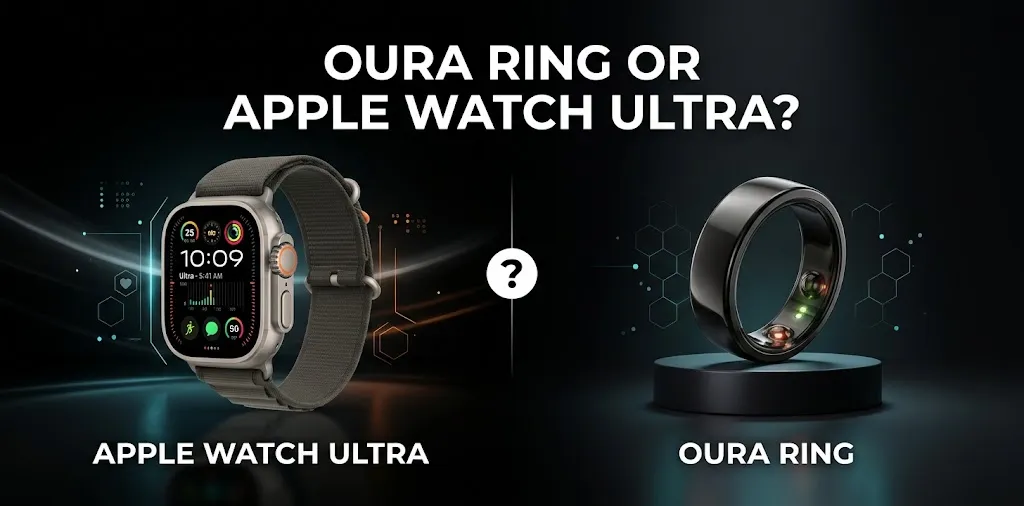
Oura Ring 4 or Apple Watch Ultra 4? For step tracking

The Apple Watch Ultra is the better overall choice for step tracking if you want to see your progress throughout the day, check your steps on your wrist, and monitor walking workouts. The Oura Ring is a strong alternative if you prefer a discreet wearable that tracks daily activity alongside sleep and recovery. Both can count steps, but how you wear them and the features you need can affect your choice.
Step-Tracking Accuracy: Which Device Counts Steps Better?
Both devices can provide useful daily step counts, but neither should be treated as perfectly accurate in every situation.
A 2026 study published in PLOS ONE compared consumer activity trackers with a research-grade activity monitor over three weeks. Apple Watch step counts averaged 2.12% above the reference measurement, while Oura Ring counts averaged 6.24% below it. However, only five participants contributed Oura data, compared with 21 Apple Watch participants, so the findings are not enough to declare one device universally more accurate.
For everyday use, the main differences are how each device detects movement and how easily you can check your progress.
- Apple Watch Ultra: Its wrist-based sensors track movement throughout the day, and you can view your step count on the watch face or in the Fitness app.
- Oura Ring: Its finger-based sensors estimate steps automatically, with the results available in the Oura app on your phone.
The difference becomes more noticeable when your hands are not moving naturally. Carrying grocery bags, pushing a stroller, or walking with your hands in your pockets can affect the ring’s readings. A watch can also miss or misclassify steps in certain situations, so neither device is guaranteed to match your actual count.
Oura Ring vs. Apple Watch Ultra: Feature Comparison
| Feature | Oura Ring 4 | Apple Watch Ultra 3 |
|---|---|---|
| Daily step counting | Yes | Yes |
| Check steps directly on device | No screen; use phone app | Yes, on watch |
| Automatic activity tracking | Yes | Yes, with supported features |
| Walking workout details | Activity insights in app | Detailed workout metrics |
| Sleep tracking | One of its main strengths | Available |
| Battery life | Typically 5–8 days | Up to 42 hours of normal use |
| Ongoing membership | $5.99/month or $69.99/year in the US | No subscription required for basic step counting |
| Best for | Discreet, everyday tracking | Steps, workouts, and smartwatch features |
| Available |  | |
Specifications and pricing can change. Battery life varies with use and settings.
Which Device Is Easier to Use for Daily Walking?
The Apple Watch Ultra is more convenient if you want immediate feedback. You can check your step count without pulling out your phone, review your activity progress, and use workout features during a walk.
The Oura Ring takes a quieter approach. You wear it like a regular ring and check the Oura app when you want to see your activity data. It works well for people who do not want a screen on their wrist.
Consider these two everyday situations:
- You walk during your lunch break: With the Apple Watch Ultra, you can check your progress before returning to work. With Oura, you can review your steps afterward on your phone.
- You spend the day running errands: The Oura Ring is discreet and comfortable for many people, but carrying bags or keeping your hands still may affect step detection. The Apple Watch offers a convenient display, although its readings can also vary with movement.
If your main goal is reaching a daily target such as 8,000 or 10,000 steps, either device can help you monitor your habits.
Price and Long-Term Value
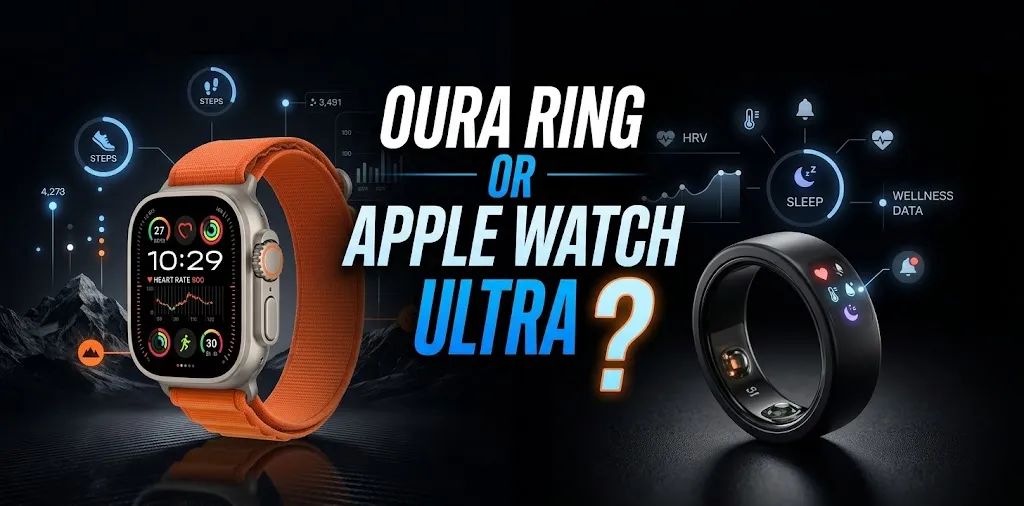
The price difference matters because these devices serve different purposes.
The Oura Ring 4 starts at $349 for the standard model in the US, with some finishes costing more. A US membership costs $5.99 per month or $69.99 per year after the included first month for new members.
The Apple Watch Ultra 3 is a more feature-rich smartwatch, with workout tools, GPS, notifications, and other capabilities beyond step counting. Check Apple’s current US pricing before buying, as prices and availability can change.
For someone who only wants to count steps, spending more on a premium smartwatch may not be necessary. If you also want detailed workout tracking and quick access to activity data, the extra smartwatch features may justify the cost.
How to Get More Consistent Step Counts
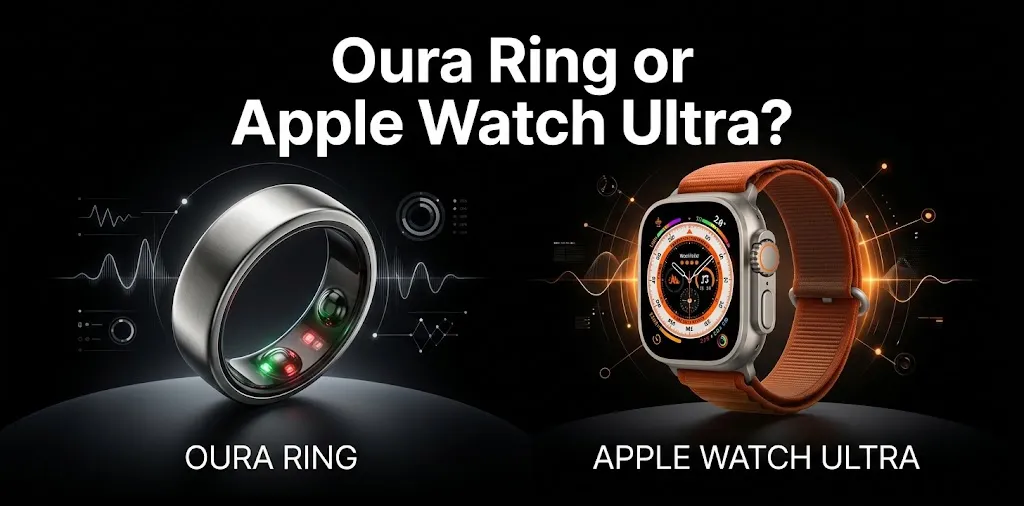
Regardless of which device you choose, use it consistently. Switching between different trackers can produce confusing totals because each uses its own sensors and algorithms. Compare your activity against your own baseline rather than expecting every device to report the same number.
For more consistent results:
- Wear the device as directed by its manufacturer.
- Keep it charged so your activity is tracked throughout the day.
- Compare daily and weekly trends instead of focusing on small differences.
- If you walk on a treadmill, check whether your arm movement affects the readings.
- Use one device as your main step-count source rather than adding counts from multiple wearables.
Remember that step counts are estimates. They are useful for tracking changes in your activity over time, but they are not a precise measurement of every step you take.
Frequently Asked Questions
Choosing between the Oura Ring and Apple Watch Ultra for step tracking can be difficult because both offer useful activity-tracking features. The following frequently asked questions cover step-counting accuracy, phone requirements, and which device is better for reaching your daily fitness goals.
Is Oura Ring more accurate than Apple Watch Ultra for steps?
Available research suggests that both can produce reasonably close step counts, with one 2026 study showing a smaller average difference from a research-grade monitor for Apple Watch. However, the Oura sample was small, and accuracy varies with movement and wearing conditions.
Can Oura Ring track steps without a phone?
The ring can detect daily movement while you wear it, and the Oura app displays the results when your data syncs. However, Gen 3 and newer models require an active membership for step tracking and related activity features.
Which is better for reaching a daily step goal?
The Apple Watch Ultra is better if you want to check your progress instantly on your wrist and use additional workout features. Oura is a good choice if you prefer a discreet ring and are comfortable checking your progress in a phone app.
Final Verdict
Winner: Apple Watch Ultra for step tracking. It offers the convenience of viewing your steps directly on your wrist, alongside detailed walking and workout features. The Oura Ring is the better fit for people who value a screen-free design, longer battery life, and broader sleep and recovery insights.
One practical tip: choose the device you will wear consistently throughout the day. A reliable daily routine matters more for building a walking habit than small differences between two step counters.