Anker 737 or Baseus Blade? For Steam Deck?

If you need a power bank for your Steam Deck, the Anker 737 is the better all-around choice for most players, while the Baseus Blade is worth considering if you prefer a slim, flat design for a backpack or travel bag. Both offer high-capacity charging, but their shape, portability, and charging features can affect how convenient they are during gaming sessions.
The right choice depends on whether you want a compact power bank to carry alongside your Steam Deck or a flat battery pack that fits neatly into your travel setup.
Anker 737 vs. Baseus Blade: Key Differences
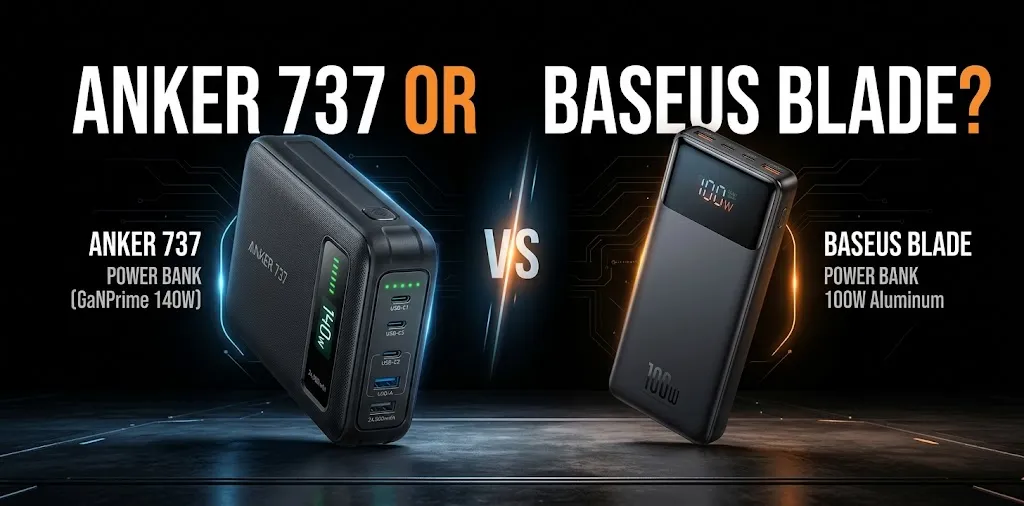
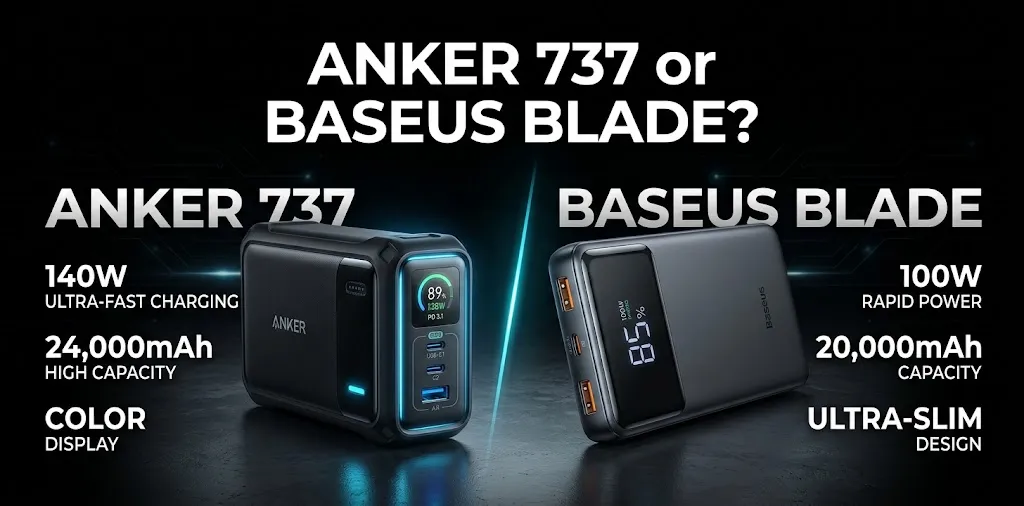
The main difference is capacity versus portability. The Anker 737 has a 24,000mAh battery and up to 140W USB-C output, while the original Baseus Blade offers 20,000mAh capacity, up to 100W output, and a much thinner body.
| Feature | Anker 737 | Baseus Blade 100W |
|---|---|---|
| Battery capacity | 24,000mAh | 20,000mAh |
| Maximum USB-C output | 140W | 100W |
| Ports | 2 USB-C, 1 USB-A | 2 USB-C, 2 USB-A |
| Approximate weight | 630g (1.39 lb) | 506g (1.12 lb) |
| Design | Thick, compact body | Slim, flat body |
| Digital display | Yes | Yes |
| Steam Deck charging | Supports USB-C PD charging | Advertises 30W Steam Deck output |
| Best for | More battery capacity and power flexibility | Slimmer travel setup |
| Available |  | |
These specifications refer to the original Anker 737 PowerCore 24K and Baseus Blade 100W, not every newer Blade model.
Which Power Bank Charges the Steam Deck Better?
The Steam Deck uses USB-C Power Delivery (PD) and comes with a 45W power adapter. Both power banks can provide power to the handheld, but charging performance depends on the USB-C port, supported charging profiles, and whether you connect other devices at the same time.
Anker 737: More Charging Headroom
The Anker 737 offers up to 140W output from a compatible USB-C port. The Steam Deck will not draw 140W; it uses only the power it can accept. The extra output is useful if you also want to charge a laptop, phone, or tablet with the same power bank.
Its 24,000mAh capacity also gives it an advantage over the Baseus Blade’s 20,000mAh capacity on paper. Actual playtime depends on the game, screen brightness, power consumption, and energy lost during charging.
Baseus Blade: A Slimmer Option With a Charging Limitation
The original Baseus Blade has a flat design that is easy to slip into a laptop sleeve or backpack compartment. It also has four ports, making it useful when you carry several USB-powered devices.
However, the original Blade advertises 30W output for the Steam Deck. That is below the handheld’s 45W adapter rating, so don’t assume it will match the charging performance of a suitable 45W-or-higher USB-C PD source in every situation.
If you play demanding games while charging, this difference matters. Power consumption can be high enough that a lower-power source may charge slowly or struggle to keep the battery level rising.
Battery Life: How Much Extra Gaming Time Can You Expect?
Neither power bank can promise a fixed number of extra gaming hours. The Steam Deck’s battery life changes based on the game, graphics settings, screen brightness, and whether you own the LCD or OLED model. The LCD model has a 40Wh battery, while the OLED model has a 50Wh battery.
The Anker 737 has a rated capacity of 88.8Wh, compared with 74Wh for the original Baseus Blade. That gives the Anker a capacity advantage of about 20%, although energy conversion losses mean neither power bank delivers all its rated energy to the Steam Deck.
Consider two everyday situations:
- Playing demanding games during a flight: The Anker’s extra capacity gives you more stored energy for longer gaming sessions, making it the stronger option if you want to play for several hours without finding an outlet.
- Playing indie games at a coffee shop: The Baseus Blade may be more convenient because its thin shape fits easily into a laptop bag, and its 20,000mAh capacity still provides a useful reserve.
These are practical comparisons, not guaranteed playtime estimates.
Portability and Everyday Convenience
The Baseus Blade wins on shape and weight. At approximately 506g, it is lighter than the Anker 737, which weighs about 630g. Its flat body also fits into spaces where the Anker’s thicker design may be awkward.
The Anker 737 is compact in width and height but much thicker. Its rounded body can work well in a backpack, although its extra weight becomes noticeable when you already carry a Steam Deck, charger, case, and headphones.
Both models have digital displays that help you check the remaining battery power. The Anker’s display also reports charging information, which is helpful when you want to check how much power the Steam Deck is drawing.
Price and Value for Steam Deck Owners
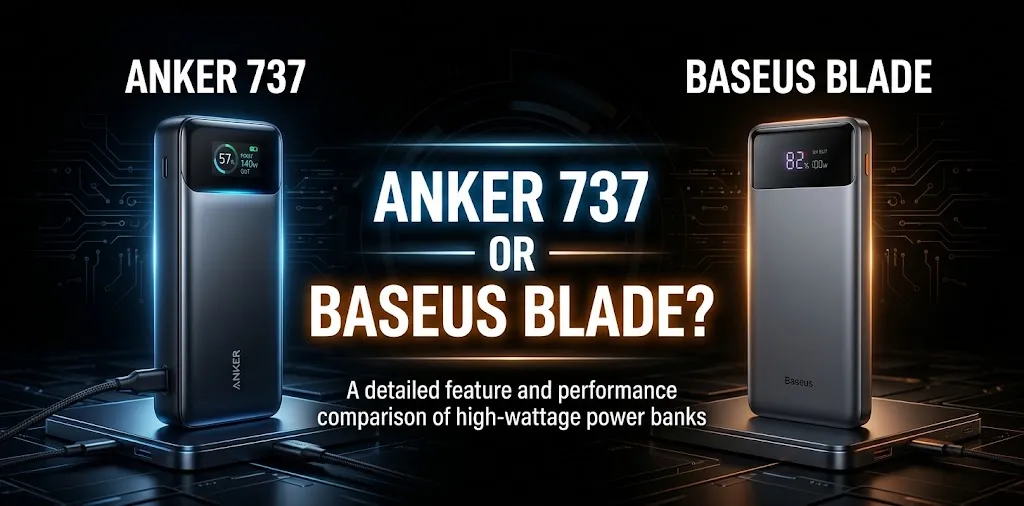
The Baseus Blade is generally positioned as a lower-cost alternative, while the Anker 737 offers more capacity and higher maximum output. The original Baseus Blade has been listed at around $69.99, while the Anker 737 has been listed at around $109.99. Actual prices, discounts, and availability may vary.
The extra cost for the Anker makes sense if you regularly charge multiple devices, need more stored energy, or want a power bank that can also handle higher-powered USB-C equipment.
If your main goal is to charge a Steam Deck during occasional trips, paying more for 140W output may not be necessary. The handheld cannot use all that power, so compatibility and battery capacity matter more than the maximum wattage printed on the box.
How to Choose the Right One for Your Steam Deck
Choose the Anker 737 if:
- You want more battery capacity for extended gaming sessions.
- You also charge a laptop, tablet, or phone.
- You prefer a detailed display showing charging information.
- You don’t mind carrying a heavier power bank.
Choose the Baseus Blade if:
- You want a slim battery pack that fits into a laptop sleeve.
- You value lower weight and a flatter design.
- You regularly charge several devices.
- You want to spend less and can accept its lower advertised Steam Deck output.
One practical tip applies to either model: use a quality USB-C cable and check the power bank’s output specifications. For the best results while gaming, look for a USB-C PD source that supports the Steam Deck’s 45W charging requirement.
Frequently Asked Questions
Still deciding between the Anker 737 and Baseus Blade for your Steam Deck? These frequently asked questions cover charging performance, battery capacity, and portability to help you choose the right power bank for your gaming needs.
Is the Anker 737 better than the Baseus Blade for Steam Deck OLED?
The Anker 737 is the stronger choice if you prioritize battery capacity and charging flexibility. The Steam Deck OLED has a 50Wh battery, so the Anker’s larger 88.8Wh capacity offers a useful advantage for longer trips.
Can the Baseus Blade charge the Steam Deck while playing games?
Yes, it can provide power to the Steam Deck, but the original Blade advertises 30W Steam Deck output. Demanding games may draw enough power that charging is slower or the battery level falls during play.
Is a 20,000mAh power bank enough for a Steam Deck?
Yes, a 20,000mAh power bank can provide a useful amount of extra gaming time when it supports compatible USB-C PD charging. Actual results depend on energy conversion losses, game demands, and whether you’re charging the Deck while playing.
Final Verdict
Winner: Anker 737 for most Steam Deck owners. Its larger 24,000mAh capacity, higher output ceiling, and detailed power display make it the more versatile choice for extended gaming and charging other devices.
The Baseus Blade is the better fit if a slim, lightweight design matters more than maximum capacity. Before buying either, confirm the exact model and its Steam Deck charging output, especially if you plan to play demanding games while charging.