Anker Nano 3 or UGREEN 30W? For fast charging?

Choosing between the Anker Nano 3 and a UGREEN 30W charger comes down to your device, charging needs, and the exact model you plan to buy. Both brands offer compact USB-C chargers, but charging speed depends on more than wattage alone. Your phone or tablet must also support the charger’s power delivery standards.
Anker Nano 3 vs. UGREEN 30W: Key Differences
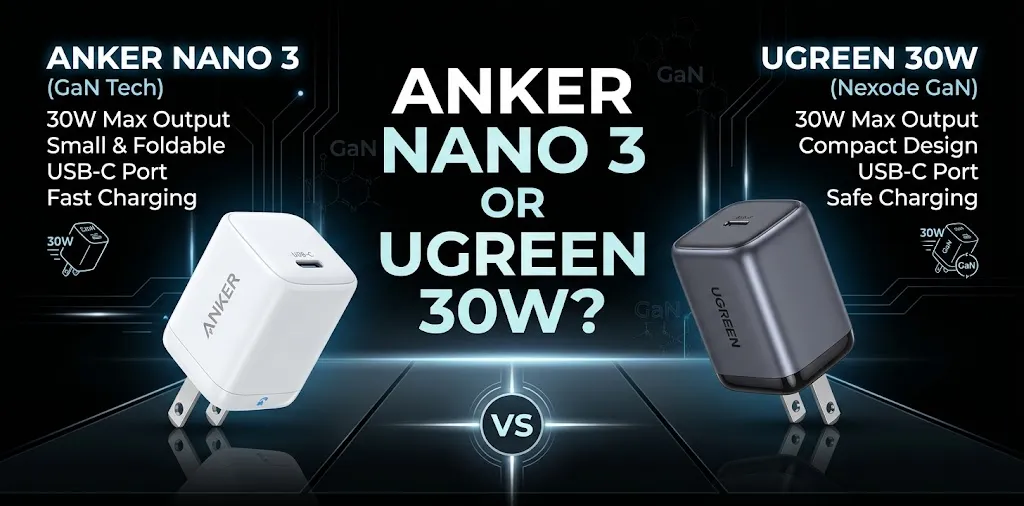
The Anker Nano 3, also called the Anker 511 Charger, delivers up to 30W through one USB-C port and supports USB Power Delivery (PD) and Programmable Power Supply (PPS). The UGREEN Nexode Mini 30W also offers USB-C charging and PPS support. Both can be good options for compatible phones, so size, plug design, price, and compatibility matter.
| Feature | Anker Nano 3 (30W) | UGREEN Nexode Mini (30W) |
|---|---|---|
| Maximum output | 30W | 30W |
| Charging port | 1 USB-C | 1 USB-C |
| USB Power Delivery | Yes | Yes |
| PPS support | Yes | Yes |
| Design | Compact GaN charger | Compact GaN charger |
| Best reason to choose it | Small size and foldable US plug | Broad charging-protocol support |
| What to check | Exact regional model and price | Exact model, plug type, and cable inclusion |
| Available |  | |
Important: UGREEN sells several 30W chargers. This comparison uses the single-port Nexode Mini as the reference model, not UGREEN’s three-port 30W charger.
Which Charger Delivers Faster Charging?
Neither charger automatically wins on speed. Both have a maximum output of 30W, and the actual charging rate depends on your device’s supported charging protocol, battery level, temperature, and cable.
For example, a compatible iPhone can use USB Power Delivery with either charger. A compatible Android phone may also benefit from PPS, but support varies by phone model. A 30W label alone does not guarantee that two chargers will deliver the same charging speed to every device.
Design, Portability, and Everyday Use
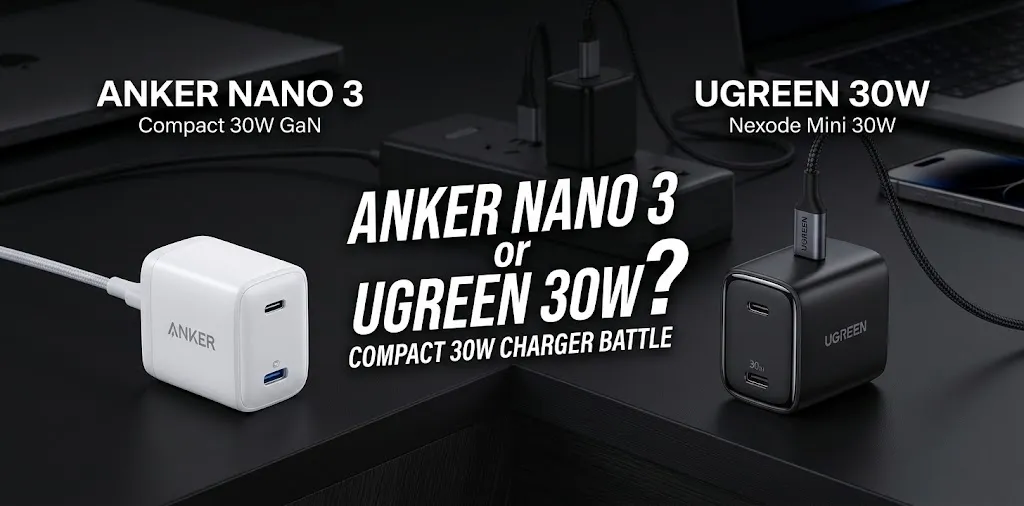
The Anker Nano 3 has a useful advantage for US buyers: its US version has foldable prongs, making it convenient to store in a backpack or travel pouch. Its compact size makes it suitable for daily use at home, school, work, or while traveling.
The UGREEN Nexode Mini is also compact and lightweight. However, plug designs vary by regional model, so US buyers should check the exact version before purchasing.
For everyday use, consider these two situations:
- Charging at school or work: Either charger can be a good choice if you have a compatible device and a suitable wall outlet.
- Packing for a trip: The Anker’s foldable US plug is useful for travelers who want a charger that packs away neatly.
Compatibility With iPhones, Android Phones, and Tablets
Both chargers support USB-C Power Delivery, making them suitable for many modern phones and tablets. The best option depends on your device’s charging requirements.
| Device type | Anker Nano 3 | UGREEN 30W |
|---|---|---|
| USB-C iPhones | Suitable with a compatible cable | Suitable with a compatible cable |
| Older Lightning iPhones | Requires USB-C-to-Lightning cable | Requires USB-C-to-Lightning cable |
| Samsung Galaxy phones | PPS support available | PPS support available |
| Compatible Android phones | Depends on supported protocol | Depends on supported protocol |
| USB-C iPads | Suitable for compatible models | Suitable for compatible models |
| MacBook Air | Can provide up to 30W | Can provide up to 30W |
Remember that compatibility does not always mean maximum charging speed. Some phones use proprietary charging systems that may not reach their advertised peak speeds with a third-party 30W charger.
Price and Overall Value
The Anker Nano 3 is often positioned as an affordable compact charger, but its price can change depending on promotions, color, and availability. UGREEN pricing also varies by model and seller.
When comparing total value, check:
- The final price after discounts.
- Whether a charging cable is included.
- Whether the plug fits US outlets without an adapter.
- The warranty and return policy available in the United States.
A lower purchase price is helpful, but not if you need to buy an additional cable or plug adapter.
Which 30W Charger Should You Choose?
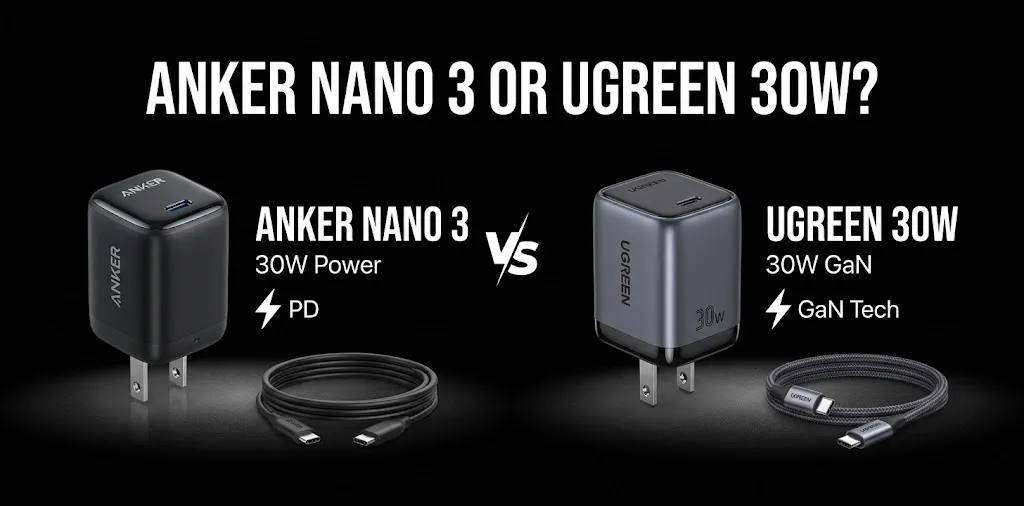
Choose the Anker Nano 3 if you want a compact charger with foldable US prongs, PPS support, and a straightforward option for everyday phone charging.
Choose the UGREEN 30W if the exact model is compatible with your device, costs less, and offers the charging protocols you need. Its Nexode Mini model supports PD, PPS, and several additional fast-charging standards.
Neither charger has a clear speed advantage based on its 30W rating alone. For most buyers, plug design, device compatibility, and total cost are more useful deciding factors than the brand name.
Frequently Asked Questions
Still unsure whether the Anker Nano 3 or UGREEN 30W charger is right for you? These frequently asked questions cover charging speed, iPhone compatibility, and laptop charging to help you choose the right charger for your needs.
Is Anker Nano 3 faster than UGREEN 30W?
Not necessarily. Both chargers support up to 30W, and actual charging speed depends on the phone, charging protocol, cable, and battery level.
Can I use either charger for an iPhone?
Yes, both can charge compatible iPhones using the correct cable. USB-C iPhones need a suitable USB-C cable, while Lightning models need a USB-C-to-Lightning cable.
Is a 30W charger enough for a MacBook Air?
A compatible 30W charger can charge a MacBook Air, but it may charge more slowly than a higher-wattage adapter, especially during heavy use. Check your particular MacBook’s recommended charging power before choosing a charger.
Final Verdict
The Anker Nano 3 is the more straightforward choice for buyers who value a compact charger with foldable US prongs. UGREEN’s 30W Nexode Mini is a reasonable alternative when its price, supported charging protocols, and exact plug configuration suit your needs.
Expert tip: Before buying, check your phone’s supported charging standard and maximum input power. Then compare the exact charger model and cable requirements to get the fastest practical charging without paying for power your device cannot use.