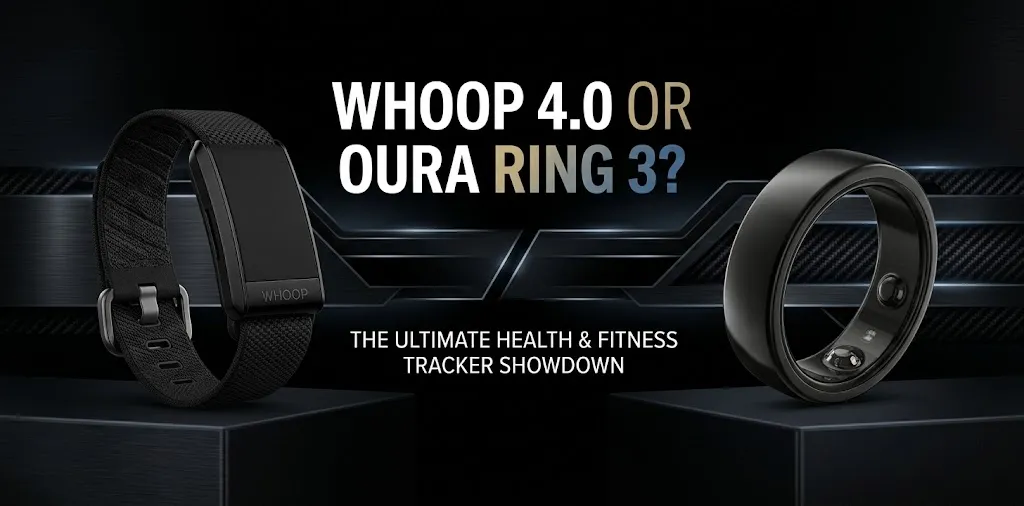
Whoop 4.0 or Oura Ring 3? For sleep tracking ?

If your main goal is to understand your sleep, the Oura Ring 3 is a strong choice for tracking nightly sleep patterns in a discreet, comfortable ring. WHOOP 4.0 is the better fit if you want to connect sleep data with workout recovery, daily strain, and training decisions. Both track sleep duration and stages, but the best option depends on how you plan to use the information.
Sleep Tracking: WHOOP 4.0 vs. Oura Ring 3
The biggest difference between WHOOP 4.0 and Oura Ring 3 is how each device presents your sleep data. Oura focuses on sleep patterns and overall wellness, while WHOOP connects sleep with recovery and physical performance. Neither device can measure every sleep stage perfectly, so treat the results as estimates rather than medical measurements.
How the Two Devices Compare for Sleep
| Sleep tracking feature | WHOOP 4.0 | Oura Ring 3 |
|---|---|---|
| Total sleep duration | Yes | Yes |
| Sleep-stage estimates | Light, deep, and REM | Light, deep, and REM |
| Sleep score | Sleep Performance | Sleep Score |
| Sleep schedule guidance | Sleep Coach and sleep need recommendations | Bedtime guidance and sleep-pattern insights |
| Recovery insights | Strong focus on physical recovery | Readiness score and wellness trends |
| Overnight comfort | Wrist-worn band | Finger-worn ring |
| Charging | Removable battery pack | Charging dock |
| Subscription | Required for the full experience | Required for detailed insights |
| Available |  | |
Both devices offer automatic sleep tracking and detailed nightly reports. The main difference is how they turn those measurements into recommendations: WHOOP emphasizes sleep needs and recovery, while Oura emphasizes sleep quality, regularity, and overall readiness.
Which Device Tracks Sleep More Accurately?
Oura Ring 3 has an advantage based on some published validation research, particularly for overnight resting heart rate and heart rate variability. However, accuracy depends on the specific measurement, and neither device can match a clinical sleep study for every sleep metric.
Research comparing consumer wearables with electrocardiogram measurements has found that Oura Generation 3 can perform well for overnight resting heart rate and HRV. WHOOP 4.0 also provides useful estimates of these measurements. These findings do not prove that Oura is more accurate for every sleep stage or every person.
It helps to understand what these devices actually measure:
- Total sleep time: An estimate of how long you slept.
- Sleep stages: Estimates of light, deep, and REM sleep based on sensor readings and algorithms.
- Resting heart rate: Your heart rate during periods of rest, including overnight.
- Heart rate variability (HRV): Variation in the time between heartbeats, which can help show changes in recovery and stress.
- Sleep consistency: How regularly you go to bed and wake up.
Neither a high sleep score nor a particular amount of deep sleep should be treated as a medical diagnosis. Look at trends over several weeks instead of worrying about one night’s numbers.
Which Is More Comfortable to Wear Overnight?
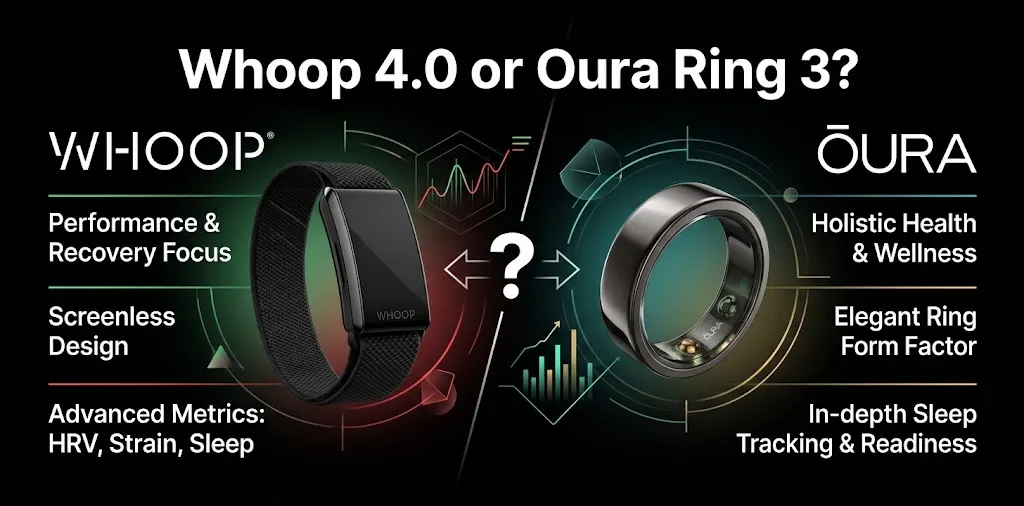
Comfort can make a bigger difference than the number of metrics a tracker offers. A device only helps if you can wear it consistently.
Oura Ring 3
Oura Ring 3 has a discreet ring design and no screen to distract you at night. Many people may prefer its compact design to a wristband, especially if they already wear a watch during the day.
However, ring sizing matters. A ring that is too tight can feel uncomfortable, while one that fits poorly may affect sensor contact. People who lift weights or do activities that put pressure on their fingers may also prefer removing the ring for those activities.
WHOOP 4.0
WHOOP 4.0 uses a lightweight wristband design intended for continuous wear. It can suit people who prefer not to wear a ring overnight or who want the same device to track exercise and sleep.
The trade-off is that some users dislike wearing a band while sleeping. If you find wristbands restrictive, try to assess comfort before committing to a long membership.
Subscription Costs and Long-Term Value
The upfront price is only part of the decision. Both products rely on subscriptions for their more detailed insights.
| Cost consideration | WHOOP 4.0 | Oura Ring 3 |
|---|---|---|
| Pricing model | Membership-based | Ring purchase plus membership |
| Detailed sleep insights | Requires an active membership | Requires an active membership |
| Membership cost | Depends on membership plan and terms | $5.99/month or $69.99/year |
| Main consideration | Membership commitment and plan terms | Ring cost plus recurring membership |
Oura’s membership pricing has been listed at $5.99 per month or $69.99 per year in the United States. WHOOP’s membership structure can vary, so existing WHOOP 4.0 owners should check their own renewal terms rather than assume that a new-member price applies.
Before buying either device, check the total cost over two years. Also confirm the seller’s return policy, particularly if you are purchasing an older-generation device.
Which Sleep Tracker Is Better for Different People?
The right choice depends on what you want to learn from your sleep data.
- Choose Oura Ring 3 if you mainly want to monitor sleep duration, sleep stages, bedtime consistency, and overnight health trends in a discreet design.
- Choose WHOOP 4.0 if you train regularly and want sleep recommendations connected to workout strain, recovery, and your daily training load.
- Consider another option if you do not want a recurring subscription or find rings and wristbands uncomfortable. A sleep-tracking watch or a contactless bedside tracker may suit you better.
Consider two examples.
Example 1: Someone with an inconsistent sleep schedule. If you often go to bed at different times and want a simple way to review sleep patterns and bedtime guidance, Oura is likely the more natural fit.
Example 2: Someone who exercises intensely several days a week. If you want to understand whether short sleep coincides with lower recovery and whether you should adjust your training, WHOOP’s sleep-and-recovery approach may be more useful.
These are practical use cases, not guarantees that either device will improve your sleep.
What Are the Main Limitations of Both Devices?
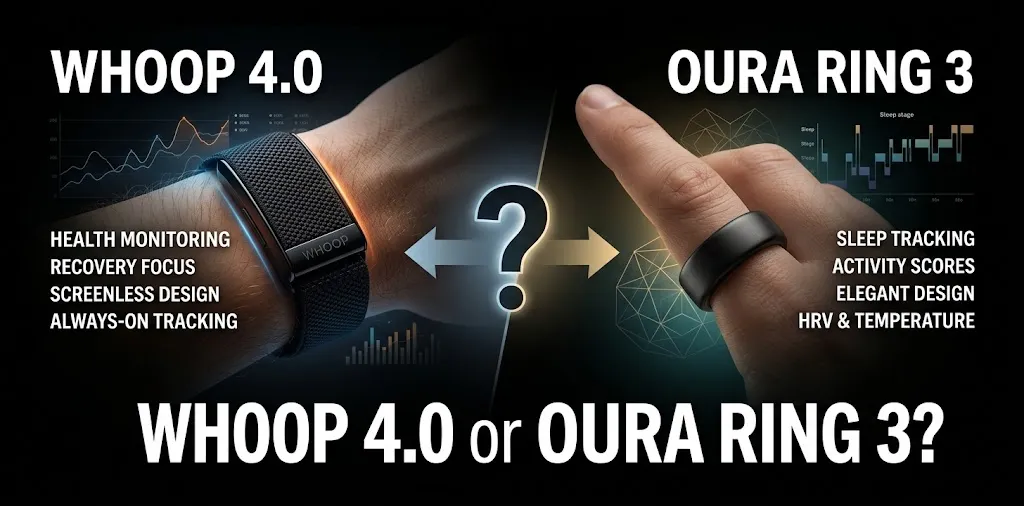
Neither tracker can tell you everything about your sleep health.
- Sleep-stage estimates are imperfect. A device may classify quiet wakefulness as sleep or misidentify a sleep stage.
- Scores can be misleading. A good score does not guarantee that you will feel rested, and a low score does not automatically mean something is wrong.
- Consistency matters. Irregular wear, poor sensor contact, and low battery can affect the data collected.
- Neither replaces medical testing. If you have persistent insomnia, loud snoring, breathing pauses, or excessive daytime sleepiness, speak with a healthcare professional rather than relying on wearable scores.
Use the numbers to spot patterns and test practical changes, such as keeping a regular bedtime or reducing late-night caffeine. Judge success by how you feel and function, not only by the app’s score.
Frequently Asked Questions
Choosing between WHOOP 4.0 and Oura Ring 3 for sleep tracking can be difficult because both offer sleep scores, sleep-stage estimates, and recovery insights. These frequently asked questions will help you compare their accuracy, features, and costs so you can choose the device that best fits your sleep goals.
Is WHOOP 4.0 or Oura Ring 3 better for sleep tracking?
Oura Ring 3 is generally the better starting point if sleep tracking is your main priority. WHOOP 4.0 is more appealing if you want to connect sleep with exercise, recovery, and daily performance.
Can Oura Ring 3 and WHOOP 4.0 track deep sleep and REM sleep?
Yes, both estimate light, deep, and REM sleep using sensor data and algorithms. These are estimates rather than direct measurements of brain activity, so individual readings may differ from a clinical sleep study.
Is Oura Ring 3 worth buying instead of WHOOP 4.0?
Oura Ring 3 can be worthwhile if you prefer a discreet ring and want detailed sleep and wellness trends. Before buying, compare the ring’s purchase price, ongoing membership fees, battery condition if used, and return policy with the total cost of WHOOP.
Final Verdict
Winner for sleep-focused tracking: Oura Ring 3. Its discreet design, clear sleep reports, and emphasis on sleep patterns make it a strong choice for people who mainly want to understand their nightly rest. WHOOP 4.0 remains a good option for athletes and active users who want sleep data to guide recovery and training.
One practical tip: whichever device you choose, wear it consistently for at least a few weeks and compare its trends with your sleep schedule and daytime energy. That will give you more useful information than judging it by a single night’s score.