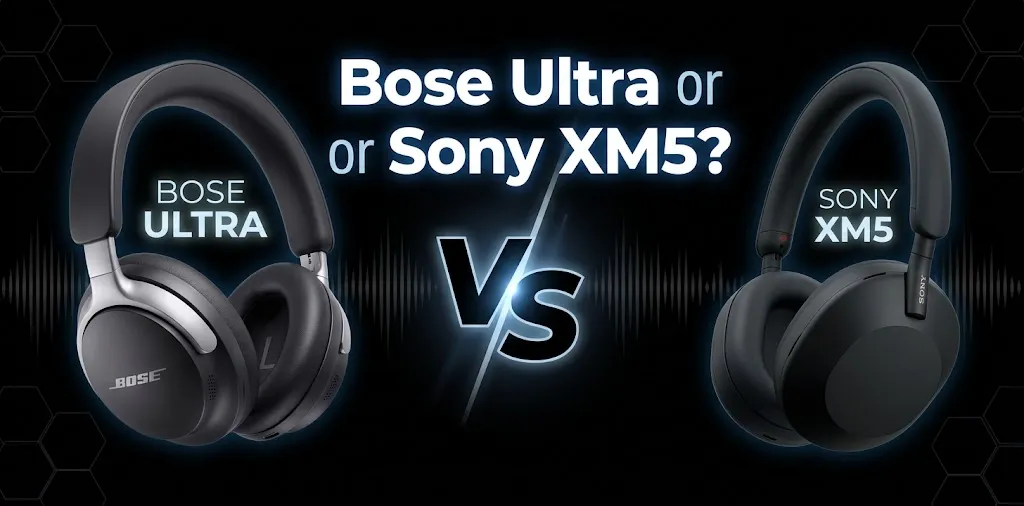
Bose Ultra or Sony XM5? For call quality?

The Sony WH-1000XM5 is the better choice for call quality, especially if you often take calls while walking outside, commuting, or working in a noisy environment. Its microphone system does a strong job of picking up your voice and reducing wind and background noise. The original Bose QuietComfort Ultra Headphones also handle calls well, but Sony has the edge in challenging conditions.
How the Microphones Compare in Real-Life Calls
Both headphones use multiple microphones and noise-processing technology to help your voice come through clearly. The difference becomes more noticeable when your surroundings are less than ideal.
Sony WH-1000XM5: Better for Noisy Surroundings
The Sony WH-1000XM5 uses four beamforming microphones and AI-based noise reduction to help isolate your voice from nearby sounds. Sony also designed its microphone system to reduce wind noise during calls.
This makes the XM5 a strong option for people who regularly use their headphones for phone calls, video meetings, and conversations on the go.
- Outdoor calls: Wind and street noise can still affect your voice, but Sony is designed to help limit their impact.
- Work calls: Your voice can remain easier to follow when there is background noise.
- Public transportation: The microphone processing helps reduce competing sounds, although loud or sudden noises may still get through.
For example, if you need to call a coworker while walking along a busy street, the XM5 is the model I’d choose between these two.
Bose QuietComfort Ultra: Good for Everyday Conversations
The original Bose QuietComfort Ultra Headphones use a beamforming microphone array and voice-processing technology to separate your voice from surrounding sounds. Bose designed this system to support clear conversations in everyday environments.
They work well for casual phone calls, conversations at home, and many work meetings. However, the Sony XM5 can handle wind and noisy environments better in many comparisons.
Consider a hypothetical situation where you take a call from your quiet home office. Both headphones should be capable options, so comfort, fit, and your preferred sound may matter more than the microphone difference.
Bose Ultra vs Sony XM5: Call Quality Compared
| Call-related factor | Bose QuietComfort Ultra (original) | Sony WH-1000XM5 |
|---|---|---|
| Voice clarity | Very good | Very good |
| Wind noise | Can be noticeable | Generally better controlled |
| Background noise | Good noise reduction | Often better in noisy settings |
| Quiet-room calls | Strong performance | Strong performance |
| Work and video calls | Good | Better overall choice |
| Outdoor conversations | Capable | Preferred option |
| Available |  | |
These are general comparisons, not a guarantee that every call will sound the same. Phone model, fit, Bluetooth connection, wind, and the calling app can all affect results.
Do Either of These Headphones Make Calls Completely Noise-Free?
No. Both models can reduce unwanted sounds, but neither can guarantee that the person on the other end will hear only your voice.
Microphone noise reduction is different from active noise cancellation (ANC). ANC mainly reduces noise that you hear through the headphones, while microphone processing attempts to reduce background noise in the audio sent to the other person.
This difference matters when shopping for headphones. A model that blocks airplane noise extremely well while you’re listening to music may not be the best at removing traffic noise from your microphone during a call.
If you frequently take calls in windy or crowded places, test the microphone in those conditions rather than judging it only by its music performance.
Which Headphones Should You Choose for Your Calls?
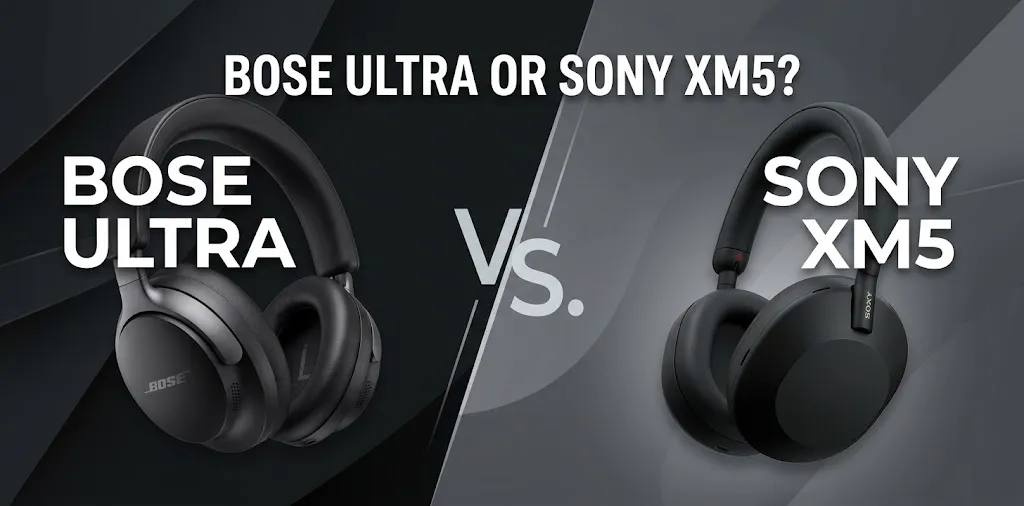
The best choice depends on where and how you make calls most often.
- Choose Sony WH-1000XM5 if you make frequent calls outdoors, commute regularly, or need clear voice pickup in noisy places.
- Choose Bose QuietComfort Ultra if you also prioritize comfortable listening, powerful noise cancellation, and immersive audio, and most of your calls happen in quieter settings.
- If you mainly work from home, either can work well. A stable Bluetooth connection and a quiet room may make a bigger difference than the small gap between their microphones.
One additional detail matters when buying in 2026: Bose has released the QuietComfort Ultra Headphones (2nd Gen), and Sony has released the WH-1000XM6. The comparison above refers to the original Bose QuietComfort Ultra Headphones and the Sony WH-1000XM5, not those newer models. Don’t assume the original Bose microphone results apply to the second-generation version.
Frequently Asked Questions
Still deciding between the Bose QuietComfort Ultra and Sony WH-1000XM5 for call quality? These frequently asked questions cover microphone performance, video calls, and noise cancellation to help you choose the right headphones for your needs.
Are Sony WH-1000XM5 Headphones Better Than Bose Ultra for Phone Calls?
Yes, the Sony WH-1000XM5 is generally the better choice for calls, particularly in windy or noisy surroundings. The original Bose QuietComfort Ultra still delivers good call quality in quieter environments.
Can You Use Bose QuietComfort Ultra and Sony XM5 for Zoom or Teams Meetings?
Yes, both support Bluetooth calling and can be used for compatible video-conferencing apps. Your computer’s Bluetooth connection, microphone settings, and background noise can affect the results.
Are Bose QuietComfort Ultra Headphones Better at Noise Cancellation Than Sony XM5?
The original Bose QuietComfort Ultra has an advantage in some noise-cancellation comparisons, although both are strong performers. That does not automatically make Bose better for calls because microphone noise reduction and noise cancellation serve different purposes.
Final Verdict
For call quality, the Sony WH-1000XM5 wins over the original Bose QuietComfort Ultra Headphones. It is the stronger pick for outdoor conversations, busy commutes, and work calls where background noise can interfere with your voice.
My practical tip: before deciding, listen to microphone samples recorded in both quiet and windy conditions. Then compare current prices and check the exact headphone generation you’re buying.