Garmin Forerunner 265 or Apple Watch? For running

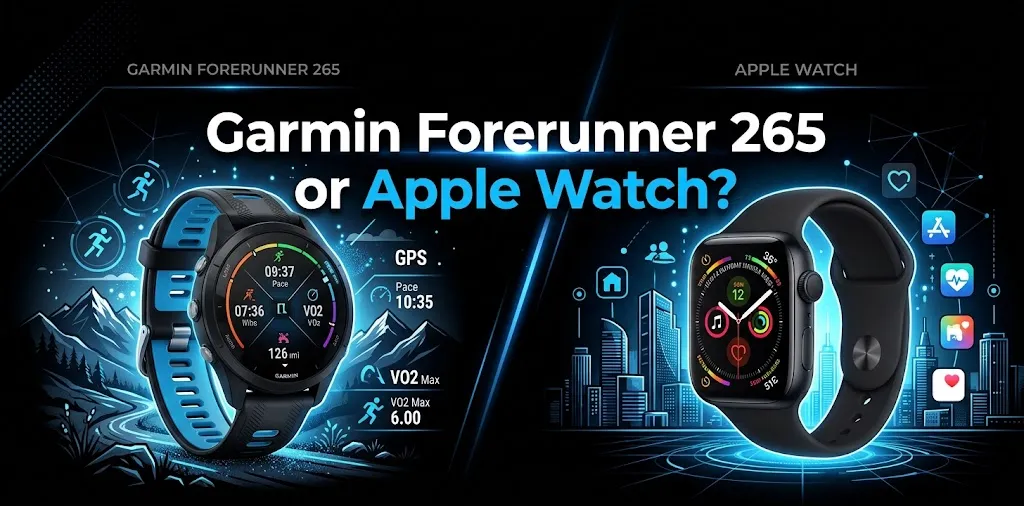
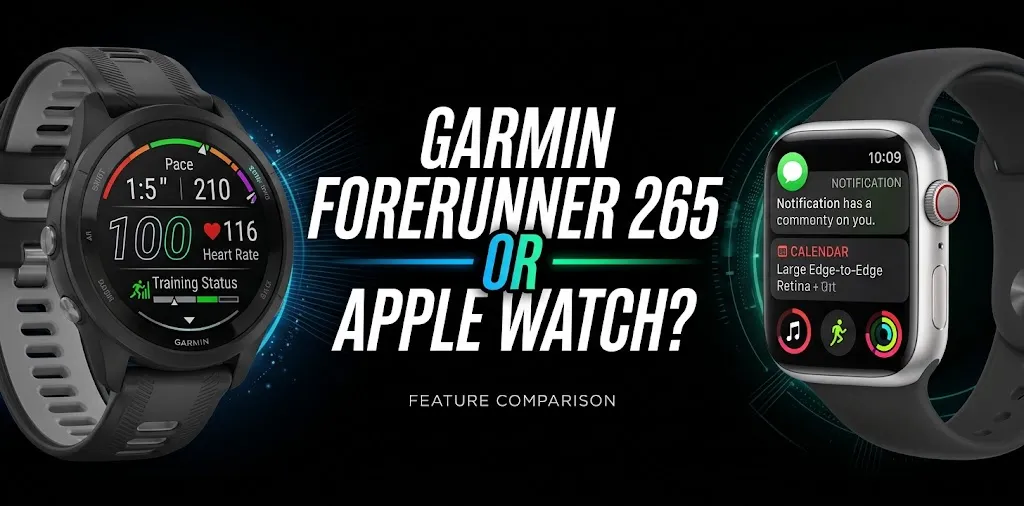
If running is your main priority, the Garmin Forerunner 265 is the better choice for most dedicated runners. It offers longer battery life, detailed training insights, recovery guidance, and running-focused features. The Apple Watch is a better fit if you want a smartwatch for everyday life that also tracks your runs, workouts, health, and notifications.
The right choice depends on how often you run, how seriously you train, and whether you value running data or everyday convenience more.
Garmin Forerunner 265 vs. Apple Watch: Key Differences
The Garmin Forerunner 265 is designed primarily for runners and athletes, while the Apple Watch combines fitness tracking with a broad range of smartwatch features. Both can track outdoor runs, monitor heart rate, record pace, and help you follow your progress, but they approach training differently.
| Feature | Garmin Forerunner 265 | Apple Watch |
|---|---|---|
| Main purpose | Running and sports training | Everyday smartwatch and fitness |
| GPS running | Multi-band GPS support | Strong GPS performance, depending on model |
| Training insights | Detailed training and recovery tools | Workout tracking, with additional insights through apps |
| Battery life | Up to 13 days in smartwatch mode | Depends on model; standard models generally need more frequent charging |
| Running controls | Physical buttons and touchscreen | Touchscreen, Digital Crown, and side button |
| Music | Offline music storage | Music apps and offline playback options |
| Phone compatibility | iPhone and Android | iPhone only |
| Everyday apps and calls | More limited | Much broader app and communication features |
| Available |  | |
Garmin’s published specifications include multi-band GPS, Training Readiness, and music storage. Battery life varies with GPS settings and music playback.
Which Watch Has Better GPS and Running Accuracy?
Both watches can record reliable running data, but the exact Apple Watch model matters. The Forerunner 265 supports multi-band GPS, which can help improve location tracking in challenging areas such as urban streets lined with tall buildings.
Apple Watch models also offer capable GPS tracking, with more advanced positioning features on certain models. Neither brand guarantees perfect distance or pace measurements in every environment.
For runners, the important factors include:
- GPS distance: How closely the recorded route matches the distance you actually ran.
- Pace consistency: Whether your current pace remains useful as you turn corners or run under trees.
- Heart rate: How closely wrist readings reflect your actual effort.
- Workout controls: How easily you can start intervals, pause a run, or check your pace.
If you regularly run structured workouts, Garmin’s physical buttons and running-focused data screens are particularly useful. If you run mainly for fitness, an Apple Watch can provide the information most people need.
Which Is Better for Training and Recovery?

The Garmin Forerunner 265 has the advantage for runners who want to understand how their training affects their performance. It includes Training Readiness, Training Status, recovery time estimates, and daily suggested workouts. These tools can help you decide when to train hard and when to take it easier.
Apple Watch provides workout tracking, activity goals, heart-rate information, and health features. Compatible software can add more detailed running analysis, but the experience may depend on which apps you choose.
Consider two hypothetical runners:
- A beginner training for a first 5K may find either watch sufficient for tracking distance, pace, and weekly progress.
- A runner preparing for a half marathon may prefer Garmin’s training guidance, recovery estimates, and detailed running metrics when following a structured plan.
Keep in mind that training scores are estimates, not medical advice. Use them alongside how you feel, your sleep, and your actual performance.
Which Watch Has Better Battery Life?
Battery life is one of Garmin’s strongest advantages. Garmin rates the Forerunner 265 for up to 13 days in smartwatch mode and up to 20 hours of GPS-only activity tracking. Using multi-band GPS or listening to downloaded music reduces those figures.
Apple Watch battery life varies by model, settings, and workout mode. Standard models generally require more frequent charging than the Forerunner 265, while Apple Watch Ultra models offer longer endurance.
For someone running 30 minutes a few times a week, charging more often may not be a major concern. For marathon training, long outdoor runs, or someone who wants to track sleep every night, Garmin’s longer battery life can be much more convenient.
Which Is Better for Everyday Use?
The Apple Watch wins if you want more than a running watch. It offers a stronger app ecosystem, convenient messaging, and broader communication features. Depending on the model and configuration, you can also make calls without carrying your iPhone.
The Forerunner 265 handles essential smartwatch tasks, including notifications, music playback, and Garmin Pay where supported. However, its interface and app selection are more focused on fitness.
There is also a compatibility difference: the Garmin works with both iPhone and Android, while Apple Watch requires an iPhone. If you use an Android phone, the Garmin is the straightforward choice.
What About Price and Value?
The Forerunner 265 launched at $449.99 in the US, although current retail prices can vary because it is an older model. Apple Watch prices depend on the model, size, cellular connectivity, and retailer promotions.
When comparing prices, consider what you already own. If you have an Apple Watch that tracks your runs well, you may not need to spend more money unless you want Garmin’s specialized training features or longer battery life.
If you are buying your first running watch, think about how you will use it over the next few years, not just its purchase price.
Who Should Buy the Garmin Forerunner 265?
Choose the Garmin if you:
- Run several times a week and follow a training plan.
- Want detailed running metrics and recovery guidance.
- Prefer charging your watch less often.
- Train for a 10K, half marathon, or marathon.
- Use an Android phone or want flexibility to switch phones.
Its biggest strength is that it makes running and training the central part of the experience.
Who Should Buy the Apple Watch?
Choose the Apple Watch if you:
- Already use an iPhone and want seamless integration.
- Run casually and also enjoy other workouts.
- Want apps, messages, calls, and payments on your wrist.
- Prefer a general-purpose smartwatch rather than a dedicated sports watch.
- Are happy with more frequent charging.
For many casual runners, the Apple Watch provides a convenient way to track exercise without giving up everyday smartwatch features.
Frequently Asked Questions
Choosing between the Garmin Forerunner 265 and Apple Watch for running can raise a few questions about GPS accuracy, training features, battery life, and overall value. Here are answers to common questions to help you decide which watch best fits your running goals.
Is the Garmin Forerunner 265 more accurate than the Apple Watch for running?
The Forerunner 265’s multi-band GPS can help with location tracking in challenging environments. However, accuracy depends on the Apple Watch model, surroundings, settings, and how the watch is worn, so Garmin is not automatically more accurate in every run.
Can you train for a marathon with an Apple Watch?
Yes. An Apple Watch can track distance, pace, heart rate, and structured workouts, and compatible apps can provide additional training plans. Garmin is often more convenient for runners who want extensive training and recovery information built into the watch.
Is the Garmin Forerunner 265 worth buying instead of an Apple Watch?
It is worth considering if running performance, training guidance, and battery life matter more to you than advanced smartwatch features. If you mainly run for general fitness and want calls, messages, and apps on your wrist, an Apple Watch may offer better overall value.
Final Verdict
The Garmin Forerunner 265 wins for running, especially for people who train regularly, prepare for races, or want detailed performance data and longer battery life. The Apple Watch is the better all-around smartwatch for iPhone users who want fitness tracking alongside everyday convenience.
Before buying, check the current price of the Forerunner 265 against the Apple Watch model you are considering. The best practical tip is to choose the watch that fits your actual running routine, rather than paying for features you are unlikely to use.